YOUR CART
- No products in the cart.
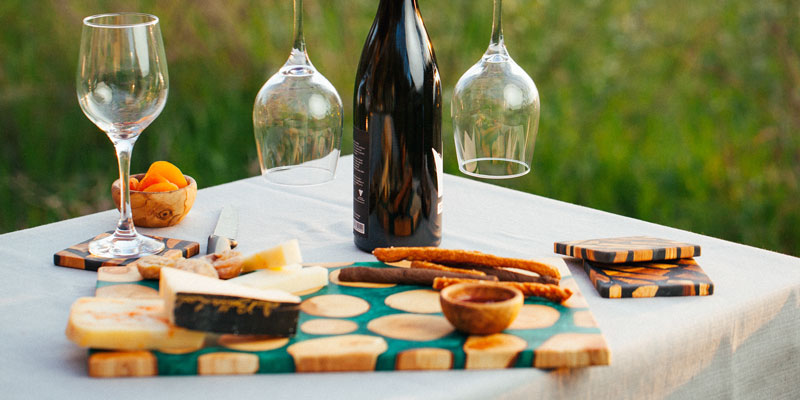
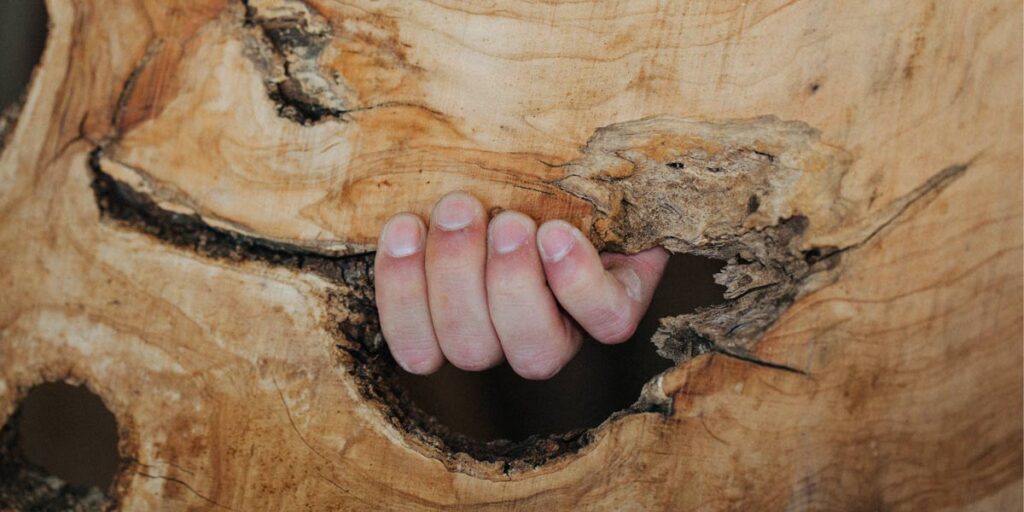
It all starts with a piece of wood. By adding resin, a little imagination, and creativity, we make unique and impressive products. But creativity alone is not enough. It requires a deep understanding of how wood behaves under different conditions, familiarity with liquid glass and the various recipes that produce textures, colors, and shapes, and, of course, a lot of manual labor.
See here the stages that each of the products we create goes through!
Selection of wood
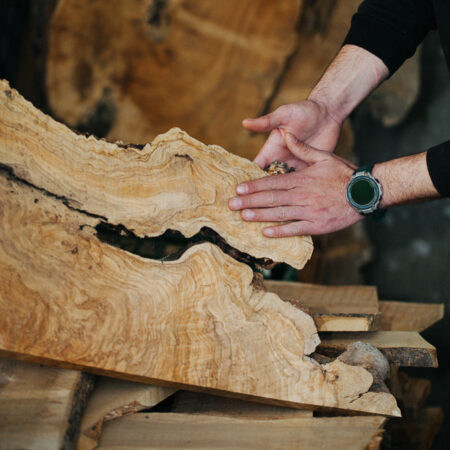
We choose olive wood because it is closely associated with Greece. We source it in Crete, Volos, or Corfu. We need to visit these places often to ensure we get the right wood.
The wood is planed.
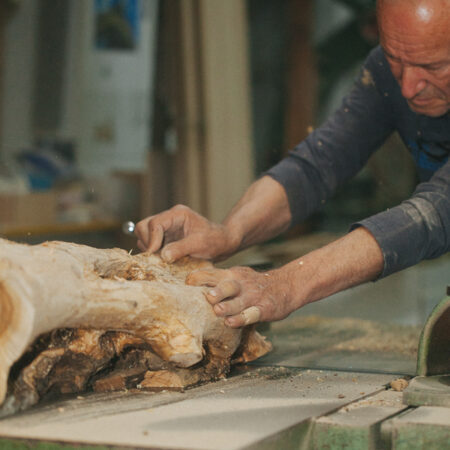
After selecting the piece we will work on to create a wall clock, a wine holder, etc., the wood is “planed” not only to make it straight but also to bring out its grain and texture.
The cut.
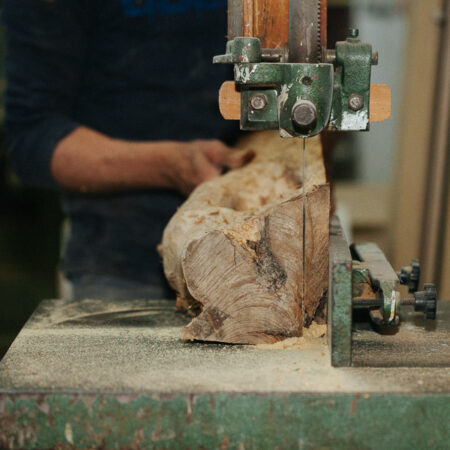
Next step: pass the wood through the band saw. Be careful! If something moves, we have to start all over again! This is where we will make the final selection of the wood “slice” that we will use later on.
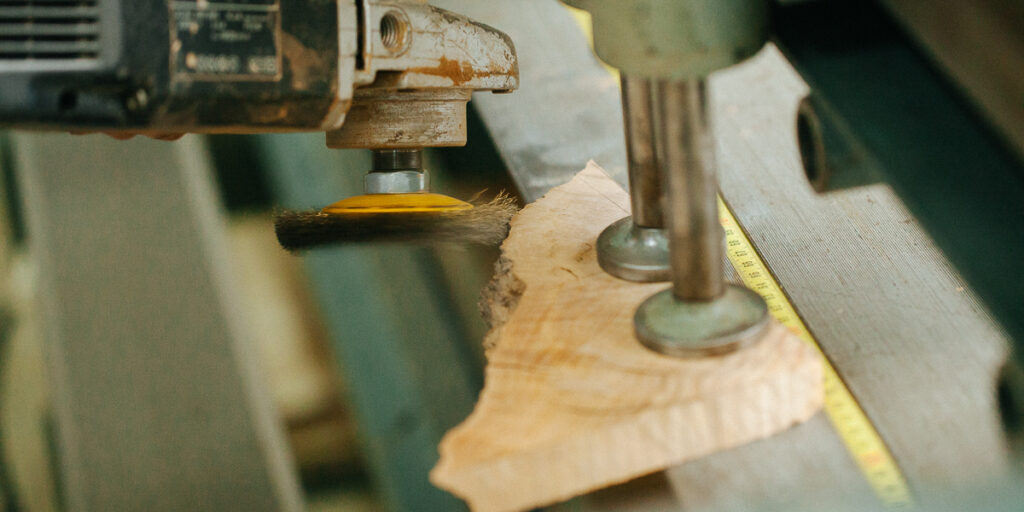
Back to the plane!
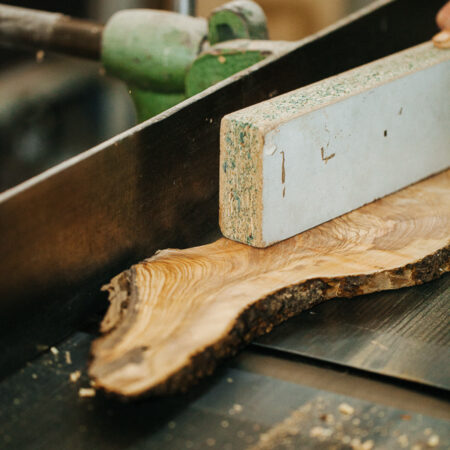
After selecting the piece that will ultimately go into the mold, we go through the molding process again. The goal is to make it straight on both sides and have the same thickness throughout. It sounds easy, but it takes experience!
Marking and cutting.
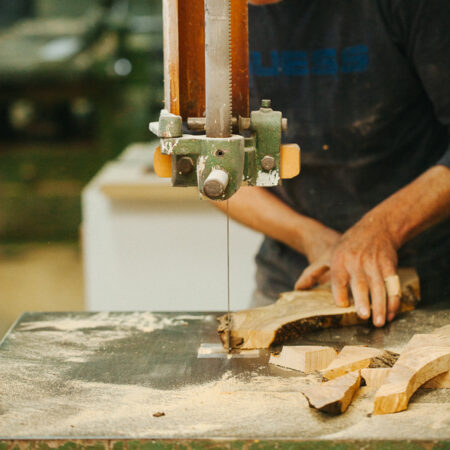
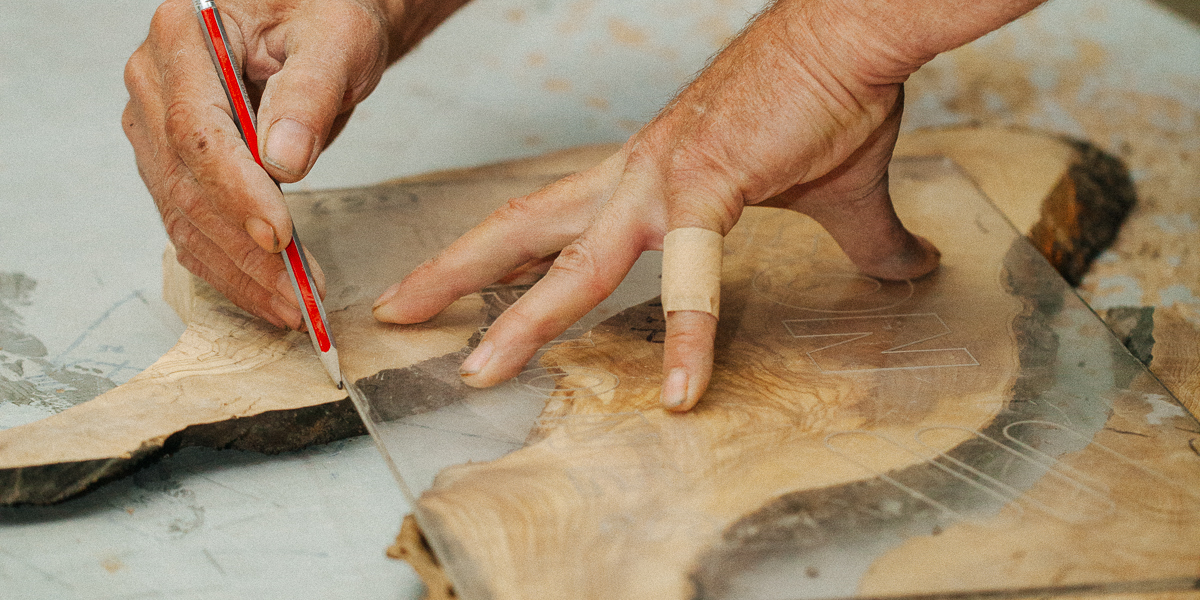
Then, after marking the wood with the appropriate guide for each product, we carefully pass our piece through the ribbon. It takes experience to be precise!
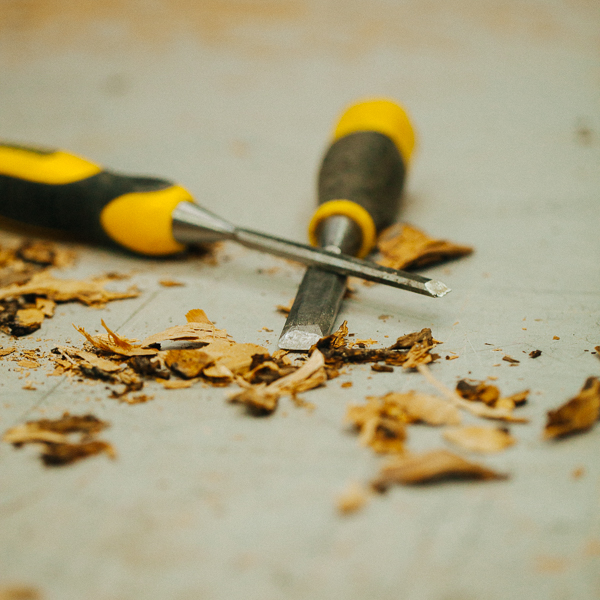
Cleaning the wood
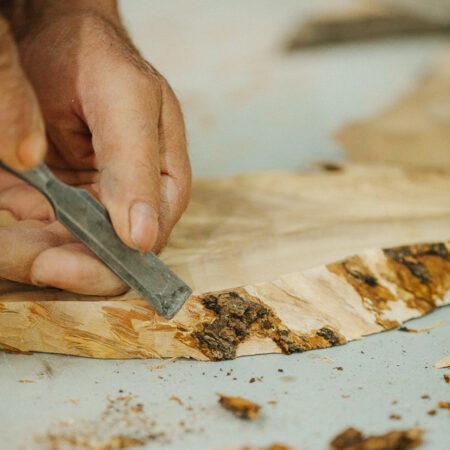
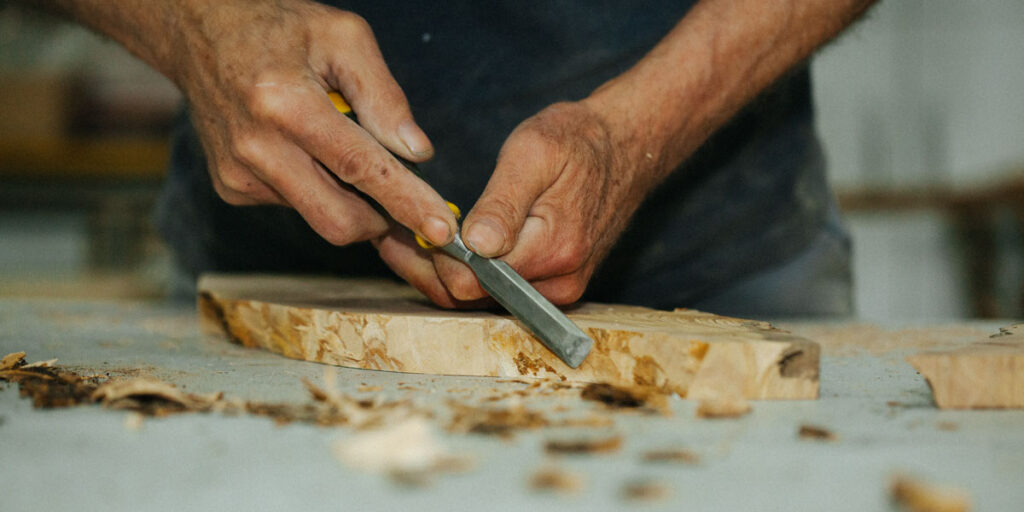
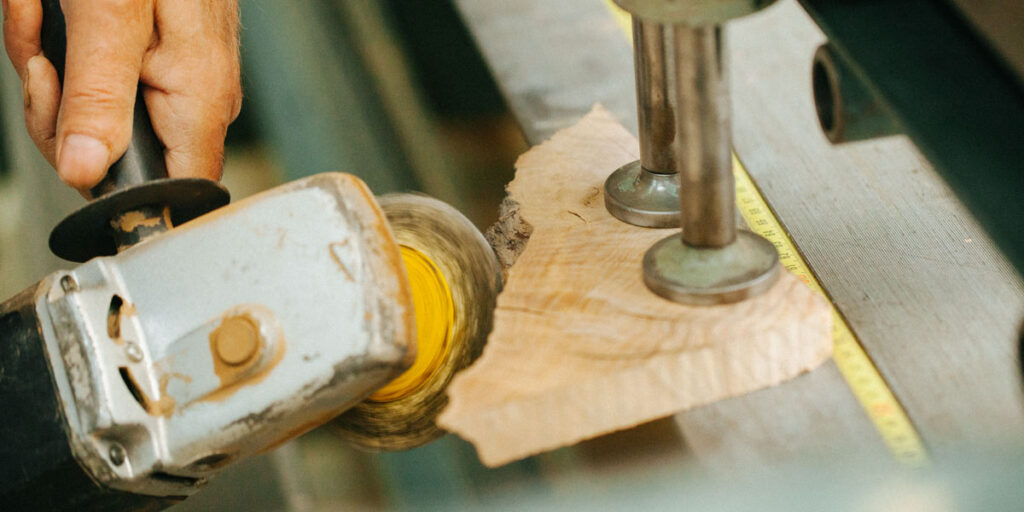
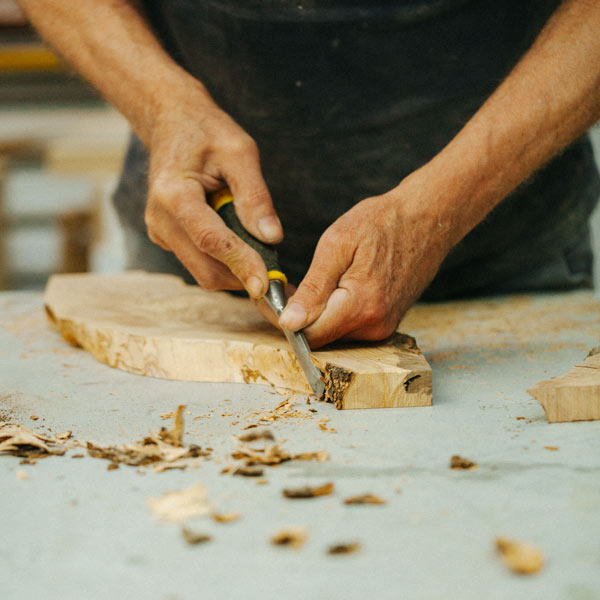
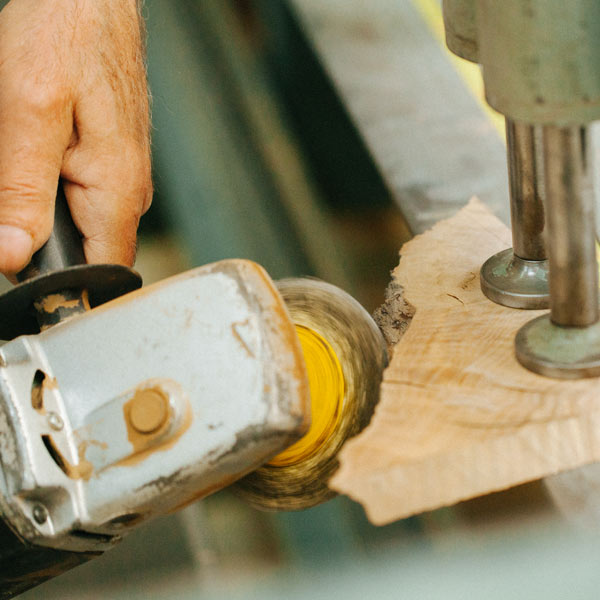
Again, we carefully clean all the parts of the wood that we think need to be removed. We also use an electric sander, but first and foremost we use traditional hand tools.
The resin!
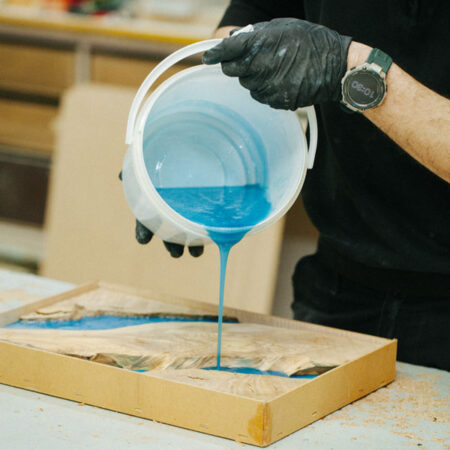
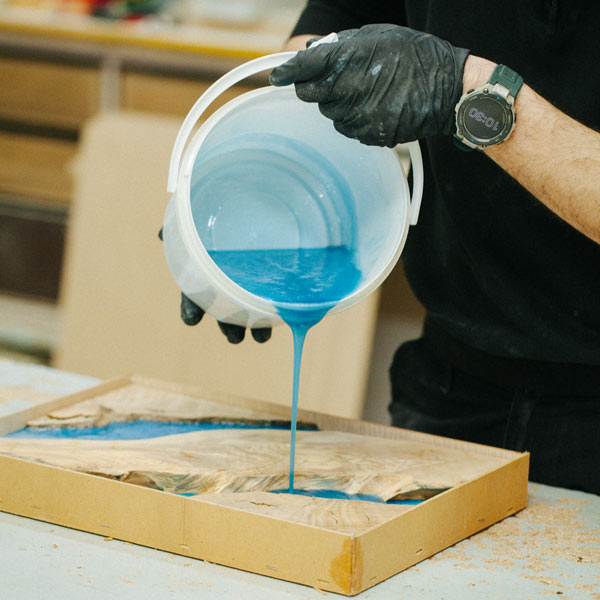
Once the pieces of wood have been fitted into our mold, it is time to pour in the liquid glass. There is a specific recipe for each color and texture we want to achieve.
We’re crafting!
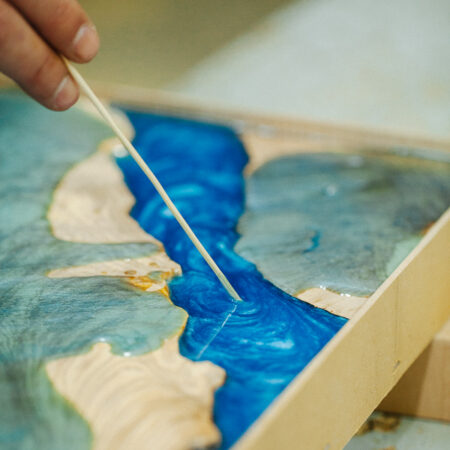
We will return to the mold a few hours later to create textures and shapes. Be careful! If you do it too early, it won’t set properly, and if you do it too late, you won’t be able to intervene!
Steady!
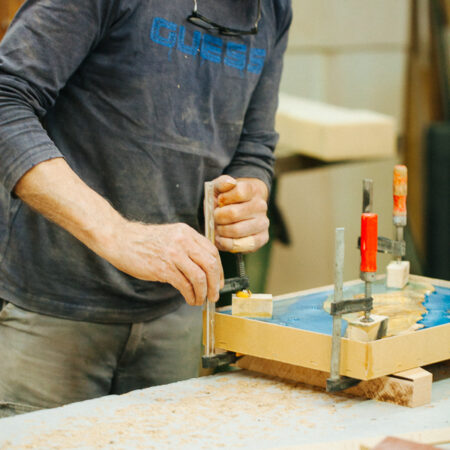
Everything remains in place so that the liquid glass can be evenly distributed across all areas. It will take days — or even weeks — before we can demold and move on to the next step.
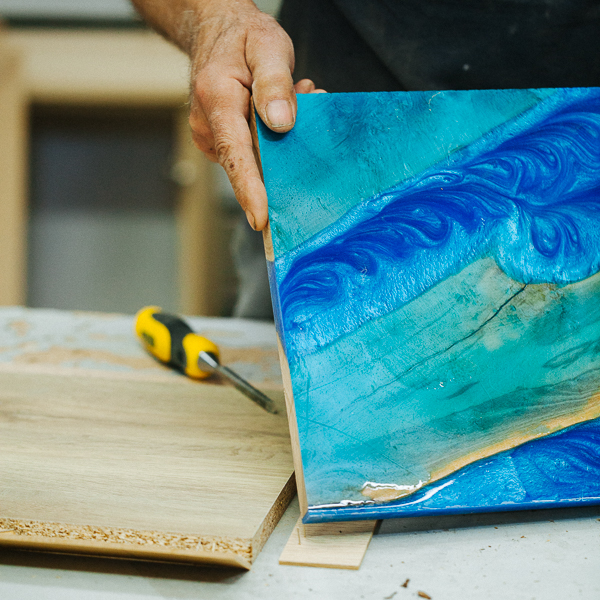
The moment of truth has arrived!
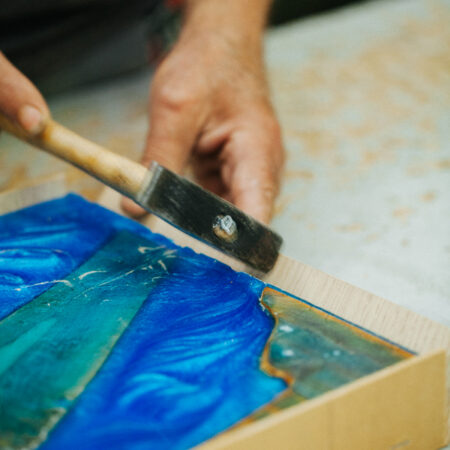
And then comes the moment of truth! It’s time to remove the mold and see the initial result. After checking to make sure everything has gone well, we move on to the most… painful part of the process.
So much… dust!
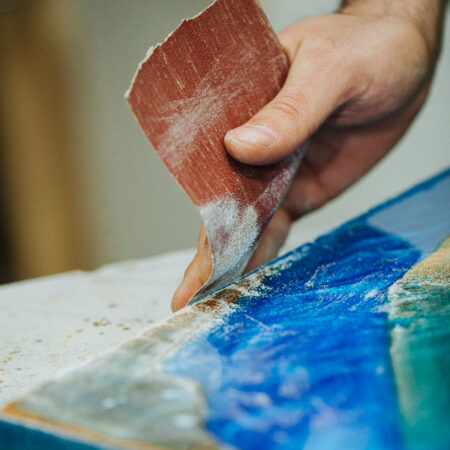
And… this is where sandpaper comes into play. As simple as it sounds, it’s not. It takes experience and skill, because otherwise you risk throwing away everything you’ve done so far.
Finally, the oil
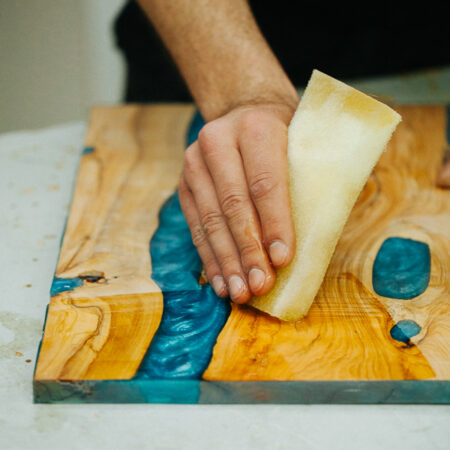
The final and most satisfying stage is applying oil, which will bring out the color and textures and bring both the wood and the wet glass to life. The materials will “bind” together to create a wonderful, unique result!

ΝΙΚΟΛΑΟΣ ΒΑΣΙΛΕΙΑΔΗΣ
ΑΡ. ΓΕ.ΜΗ. : 173060905000
Όταν επισκέπτεστε έναν ιστότοπο αυτός μπορεί να αποθηκέυσει ή αν ανακτήσει πληροφορίες από τον περιηγητή σας, κυρίως στη μορφή των cookies. Εδώ μπορείτε να ρυθμίσετε τις προτιμήσεις σας στην διαχείριση των Cookies.